Tuesday, 10 August 2010

Long day's journey into light

In the summer of  1994, Candia McWilliam took a phone call from Stanley Kubrick, the Hollywood  director, who asked her to collaborate on the screenplay of his latest movie.  “And do you know the  title?” she asks with a lop-sided grin. “Eyes Wide Shut.  Prophetic is it not?”

McWilliam’s face tells its own story. It is long and broad and  has marks and folds around the eyes.   There is a  puffiness,  caused by anti-depressants, and she appears to have no eyelids. Every now and then, an involuntary twitch passes across her cheeks.   “I am what you can look like if you are lucky enough to have had an operation to overcome a particular kind of blindness,”  she says blandly over the coffee cups of a west London cafe.  

The author feels it almost  superfluous to add that this “no simple tale of triumph over a tragedy”, but it is true only up to a point.  McWilliam – who wants “to transmit how thrilling it has been to be alive” - can concede that  her return to the Edinburgh International Book Festival this month, with a 500-page autogbiography, signifies something special about the human spirit. 

From the spring of 2006, she lived a virtual recluse, “a parrot in a cage with the hood over it”, because she had no wish to burden her friends and family with her blepharospasm, a rare brain condition  which causes the eyelids to close over otherwise healthy eyes.   She was condemned to stumble around her own home, until, inevitably, she broke her leg in a fall.  Later, when blood poisoning set in, she found herself in what she calls the “dying ward” of a hospital.

Two years after diagnosis, she wrote an article about her blindness, published in The Times. Marion Bailey, a blepharospasm sufferer, read it and wrote  recommending a Nottingham surgeon, Alexander Foss, who had developed a treatment.  Within weeks, McWilliam was under the knife.  Tendons from her knees were transplanted into the brow of her head and used to pin open her eyes.  To  general amazement, she emerged, unblinking, into the light.

That story of recovery is remarkable enough, but What to Look for in Winter,  is shot through with many tales of hope and despair: her mother’s suicide, two “defenestrated” marriages, her alcoholism, separation from her children.  The subtitle, A Memoir in Blindness, is recognition of her inability to see her way, even when she was sighted. 

 McWilliam was born and raised in Edinburgh, where her father, Colin, was an architectural historian.  Margaret, his wife,  stayed at  home, cleaned the house and mangled the clothes.

“She was 6ft 2in of towering glamour,” she says.  “She was full of talent, stuck on Warriston Crescent, pushing a pram. What could she do?”

McWilliam was just 7 or 8  when she awoke to find her mother lying beside her, and a bottle of pills on the bed.  “I think she had on not a nightgown but a green wool dress,” she writes. “She had sewn me a pink pillow with grey kittens and pussy willow branches on it to help combat my nightmares.”

Whether she  is “non-existent or in heaven” McWilliam’s sees “mummy” in her own children, Olly, Clem and Minoo.   “ I remember little of her, but I  think, ‘That is how she used her hands.’ When my older son smiles, his eyes go sideways - that is what she did. She is infinitely happier in her incarnation in my children, than she was as a person, locked into Edinburgh.”

Beyond the obvious trauma, Margaret McWilliam’s death had other far reaching consequence for her daughter.  Candia’s father re-married; she was sent away to school, where she made a new friends, and found a surrogate family who lived on the island of Colonsay.  Her  kin network, family,  step families, adopted families, not to mention her first husband  (Quentin, Earl of Portsmouth), second husband (Fram Dinshaw, an Indian born, Oxford academic)  mothers-in-law and children, form a mesh of humanity that has often saved McWilliam from herself.

At school, she was teased that she had swallowed a dictionary.  After university, her literary talents came though when she won a Vogue short story competition and  her 1989 debut novel, A Case of Knives, won huge reviews.  Articulate  and stunningly beautiful, she was seized upon by the Sunday supplements, – but she never appears to have accepted that the woman posing for photos was actually her: “I looked a bit thick,” she writes, “where thick overlaps with apparently sexy. A bad mixture for a sardonic introvert.”

She had been drinking all her adult life.  At first it heightened perception, and made her clever. Soon she was just sodden.   “I lost my face when I drank,” she says. “ All I could see was my green eyes  peeping through this awful bruised, sheening, bulging,  sweating, flaky thing.  I lost my bones, I lost my elegance, I lost my hands. I lost all of it. And I lost the capacity to be clean.  I hid in black, dirty, grey clothes. Once you are sodden, you drink to oblivion and wake up in shame.  You live in the dark, and hide from the light.”

Even in the pit of her illness, she  continued to write reviews and short stories, but quit writing novels because she dreaded publicity. “I simply could not face it, and the more shameful I felt myself to be, the more I drank,” she says. “I might have had ‘human block’, or ‘existential block’, but never writer’s block.”

She gave up drink in 2001, and three years later – at Edinburgh’s book festival – outed herself as an alcoholic. In 2006, not long after she had been invited to join the judging panel for Booker Prize, the blepharospasm descended.  Twenty years ago the same condition was held to be a mental illness and McWilliam would have been sectioned  - “that’s true, and do you know, I would have accepted that” she says.  Does she think she brought it on herself? 

“I alternate.  Sometimes I think it was a tailor-made punishment, that I summoned it to alleviate those I love of any putative pain.  Then I think maybe it is a consequence of my habits of my mind, which are so self defeating. Maybe I pulled this snood of blackness over my head. Maybe, because I am so self-sabotaging, every time something looks like it is going right, I ensure that it doesn’t. 

 “Some doctors say it is a consequence of certain habits of mind, or a consequence of a protracted  period of unspeakable stress, or of alcoholism.  I just don’t know. “

In the depths of drunkenness, she had considered suicide;  physical blindness conjured up the same despair.
“I tried to summon death in my blindness because I thought it would get everyone off the hook of having to pretend they could bear me,” she says. “That was not a loving way to think.  Then I went through periods of thinking,   ‘Is there a way of dying and it appearing an accident.’

“There isn’t.  I cannot leave my children in the sort of doubt I have had. I love them too much.  I want to know not just what their children will be like, but what kind of shirt they are wearing, what made them laugh today, what they had for breakfast.

“I am infinitely curious. I never ever lost that response to life.  Even when I was at the back of the cave and under the mud, the crackle of thought – like that painting on the Sistine chapel – lay in there somewhere. The battle to get back to it did seem long and weighty.  I  couldn’t depend on the usual things that people depend on – private intimacy, a partner.  I have to depend on work, the beauty of the world, chance.  Here is a talent I may have, I really don’t want not to have used it when I conk. But in the end we are all alone.”

A few weeks ago, McWilliam, 55, left London, to live in Edinburgh, a six-month trial to see if she was ready to return for good to the city.  Instinctively she feels her home town   is ready to receive this woman  “in the autumn of her life”,  with her foldaway white stick  and her stock of anti-depressants.  But though she wants to keep writing and talking, she says her identity  is shot to pieces.

“I  can’t rely on something that I didn’t know I was relying on, but was,” she says. “I wanted  strangers to like the look of me. Particularly children. But children don’t like the look of me now.  When I smile at babies I have to be really careful they don’t burst into tears.”

It seems a desperately bleak appraisal.  Perhaps self-assessment has never been her strong suit.  Would she accept that she remains blind to her real identity?   That her friends, family and readers, want more than just her beautiful words on the page; would she agree that they might love her appearance too?

“You are a complete darling.  Maybe the penny is about to drop.” 

  • Portrait by Colin MacPherson
  • This article - one of my better ones, I thought - appeared in The Times Edinburgh International Book Festival supplement. The review below appeared in The Times Weekend Review section, the previous Saturday.

What to look for in winter

In the opening pages of What to Look for in Winter, Candia McWilliam summarises her state of being as she embarks on  the memoir that marks her  first substantial work for 16 years.  She is,  writes McWilliam, six foot tall and afraid of short people.  She is a Scot and an alcoholic.  There is nothing wrong with her eyes, but she is blind. She cannot lose her temper, though circumstances are contriving to make her mad. She exudes marriedness, but she is alone.

So  begins  one of the most extraordinary literary autobiographies of this or any other year.  It opens  amid the author’s sudden and inexplicable blindness, but stretches back into a meditation on her life, a trawl through sadness  via her mother’s suicide, into the alcoholism and  chaos that McWilliam  herself brought  down on two failed marriages.

After periods of despair and near-madness it ends, against all odds,  in a kind of triumph.  Vision has returned – she is no longer dictating to her secretary but writing again for herself, eyes wide open.  McWilliam, still racked by doubt and scarcely-concealed self-loathing,  thankfully remains a large presence among us.

The  story of her recent past is distressing.  In 2006, soon after she was selected as one of the judges of the Booker prize, the author was struck down by blepharospasm, a rare condition brought on by a fault in the brain, that causes the eyelids to close over otherwise healthy eyes.  It was, she thought, untreatable; indeed 20 years ago, sufferers, usually women, were often sectioned under the mental health act and confined for the remainder of their days.

Appalled by  the affect of her illness. McWilliam became “a fat ghost”, an inconvenience,  she thought,  to her family and hid  herself away.  “I look odd and slow and vulnerable,” she writes. “I creep along and hold my eyes up in their itching sockets as people hold spilling glasses of drink above a throng, as though the drinks with their precious realised meniscuses are threatened...  [I]  make involuntary noises and pre-emptive twitches  and sallies with my head, which aches even by the end of a morning as if weighed with lead beans at the back.”

It is her disability, the thing that might have ended her career as a novelist, that paradoxically becomes transforming.  In blindness, McWiliam begins writing again, turning her mind’s eye on to the past, determined to see the truth of her life.  

The revelations are almost unbearably painful and from the beginning we see how her parents failing marriage teed up her own despair.   In a very prim Edinburgh, her father was an inspector of historic buildings, a distant figure, while her mother,  a housewife,  was glamorous,  intelligent, frustrated, lonely and, in the end, just too sad.   

One morning when she was about eight years old, McWilliam awoke to find “mummy”  lying dead beside her in bed: “She had sewn me a pink pillow with grey kittens and pussy willow branches on it to help combat my nightmares ... I do not recall whether her head rested on this pillow at the end.”
       
Beyond the burden of guilt laid down on the young child, Margaret McWilliam’s death inevitably reordered her daughter’s life.  Her husband re-married; Candia was sent away to a school , and slowly began to assemble the cat’s cradle of  friends, family and step family, that would  provide a safety net when life later threatened to overwhelm her.

Her vulnerability will surprise readers who remember  the impact of her 1989 debut novel, A Case of Knives. McWilliam arrived on the scene young, beautiful and articulate, but even while she was being photographed for the gossip  columns, she  was already plumbing despair.

Her craving for alcohol hardly ceased, from the first taste of advocaat, drunk after a church service.   By the time she had sunk two marriage, and removed herself from her three children, she would down anything, “household cleaners, disinfectant, a substance called Easy-Iron that lends smoothness to laundry, but it is not a smooth drink.”

The book is not  irredeemably black, far from it.   McWilliam is   “a sardonic introvert”, she loves laughter and tumbles out vivid detail in her reminiscences.  Terence Mitchison – a relation of Naomi Mitchison, the author – was McWilliam’s first proper boyfriend. Terence “breathed jokes” and sent them to her colour-coded, brown for medieval jokes, green for rural jokes, pink for jokes to do with empire – “and so on”, through  the colours of the rainbow.   After the relationship cooled, the pair were friends enough to share a barge on the Brecon Beacons canal, where Terence “embroidered his admiral’s cap with the barge’s name, Samuel Whiskers.”

It was through Mitchison she met  Anthony Appiah, the grandson of Sir Stafford Cripps, and nephew of the Queen of Ashanti.  She found herself “building sandcastles with the right-wing philosopher John Casey”  and was “introduced to green Chartreuse by the composer Robin Holloway”. She  played piano duets with Roger Scruton.  For good measure, David Watkin, the architectural historian, taught her to dance the galope.

As she assembled tales like these, McWilliam found the humour, the shafts of light, that must have lightened her darkest moods. Then, after an article about her physical blindness was published in The Times in 2008, she was recommended to a surgeon who had developed a treatment for blepharospasm. Within a matter of weeks, she began the painful, invasive surgery which literally pulled her eyes open for ever more. At the end of What to Look for In Winter the light is pouring in.

McWilliam, still just 55, has led a life of extraordinary richness, that for all her self-destructiveness, remains full of love. The final page of the book movingly acknowledges those people who have been closest and cared for her most. It concludes with a line from Milton, blind and mourning his dead wife: “I wak’d, she fled, and day brought back my night.” For a sardonic introvert, this counts as a happy ending.

Sunday, 1 August 2010

Dreamers hit the Edinburgh trail


A small, dark-haired woman is staggering across departures at New York’s JFK airport, weighed down by a couple of suitcases and a backpack. She has travelled 2,500 miles, but has an ocean to cross before she can even begin to contemplate her new life of stardom. To help her on her way, she has stowed 1,000 needles among her luggage.

Meet Olivia Rhee, the still not-very-famous “singing acupuncturist” en route to the Edinburgh fringe. Brimful of hope, this morning  when she sets foot on British soil for the first time, Rhee will join thousands of others whose greatest desire is to find stardom over the weeks ahead.

It is easy to be cynical about the Fringe, all those slick comedy promoters and TV executives who fill up the city; the student luvvies so roaringly drunk for the first time in the their lives. But among the 21,000 performers who arrive, there are hundreds of dreamers who woke up one morning, and took the miraculous decision to abandon their job, or sell their house, or leave their partner – or any combination of the above – to prepare for their shot at fame in Edinburgh.

Rhee, 42, is one of that fearless breed. “I am so much closer to my dream now I am a performer,” she says cheerily, ahead of her second long-haul flight. “Every step further along makes me a little bit happier. Just having the opportunity makes me smile. I am on my way.”

In any other August, she would be working acupuncture clinic, founded in 1975 by Hak, her father, when he moved his family from Seoul, South Korea to Las Vegas. But while Rhee studied hard to become a qualified doctor of oriental medicine, her career has never quite been enough to douse that needling desire to enjoy the limelight.

Her Edinburgh debut is a mixture of stories and poetry, song and dance, but for all that, Adventures of a Singing Acupuncturist, ironically enough, might see a little pointless. Nothing of the sort, retorts Rhee, who has been rehearsing in New York for a week.

“I know four guitar chords, I can play the congas,” she says. “And I do have feet. I can’t really call myself a dancer, but I do a kind of freestyle. People look at me and point. There is a unique quality to it.”

If Rhee has all the optimism of the Fringe virgin, Lynn Ruth Miller, 78, is a grizzled veteran by comparison.

Professor Miller - in an earlier life she held the chair of humanities at the University of Toledo – had never performed on stage until her Edinburgh debut five years ago. This year, she flies in from San Francisco with a portfolio of shows and turns, including her unique rendition of that Sex Pistols classic, Anarchy in the UK, which ends with her throwing brassieres into the audience. Sid Vicious would have approved.

But the performance to capture Edinburgh’s heart is Ageing is Amazing, her one-woman burlesque that celebrates the sagging glories of senior citizenship. Conforming in almost every degree to Sam Goldwyn’s dictum: “Start with an earthquake, and build up to a climax”: it opens to the tune of the Strip Polka as Miller slowly undresses.

“If my mother knew I would be stepping out with tassels on my nipples, she would be spinning in her grave,” chuckles Miller, who has worked her way through two husbands (“both my own”). What on earth makes her stand up in a room full of strangers and disrobe? She has no hesitation. This is all about love.

“I go to Edinburgh, I make people laugh, and they stand and cheer,” says Miller. “
It is as good as any orgasm. This is approval and love beyond anything I have ever had. In San Francisco I am an old lady; in Edinburgh I am something.” 

Peter Buckley Hill promotes the Free Fringe - a roster of over 300 shows with no admission charges – and sees more hopeful and hopeless acts than most. Very few of the dreamers will fulfil their expectations, he warns.

“The fringe is entirely fuelled, and financed, by performers backing their dreams – the wastage rate is high. People do succeed, but only by working hard at what they do all the year round. It takes a lot of effort to make your performance sound effortless.

“The overwhelming majority go away disappointed. Either they don't know how small the fringe audiences are, or they believe against all logic that the world will beat a path to their door. If you're a leaf, even quite a good leaf, you go to the forest if you want to hide, not if you want to stand out.”

After years of effort, some, a tiny handful, come into this year’s festival with a sliver of a chance, that finally the breakthrough will come, the reward for so impetuously leaving a former life behind.

Kate Smurthwaite, 34, was head of strategy for a hedge fund, who gave up finance six years ago to become a full-time stand up. Jools Constant, watched his marriage collapse and threw away a successful building business, employing 12 people, as he set about turning himself into comedy performer and writer.

“It has given me a new life. For the first time I feel ‘this is where I should be,” says Constant, 42, who lives in a single room, somewhere in central London. “I made a clear-headed decision to lead a life where I expressed myself, and which was rewarding. I found it among people that I like and respect.”

Smurthwaite, like Constant, she has acquired a healthy audience on the London stand-up scene. She has no regrets about swapping the dreary world of finance for the adrenaline rush of performance.

“I went back to my old job for a while – just three months,” she recalls. “After a couple of day, I was thinking, ‘This is just so not me’. I’d found stand-up, and was so thrilled and happy to be doing it. It’s strange to look back and think, ‘Why did I put up with a job I hated so much for so long?’ You’re young I suppose, and you have to be earning money. Instead of doing something that actually inspires you.”

Others are less sanguine. Like Rhee, Danny Hurst, from London, has turned his own life into art, and brings a comedy drama, I Was a Teenage Rentboy to the Fringe. It really is based on his own life story, the grubby assignations and the street-walking that funded him through college.

“It’s more cheerful than an average episode of EastEnders,” he says diffidently. “I’m not looking for stardom – all I want to do is make a living as a performer.”

And that is true of all these magical self-made artists. Each one craves wider recognition of the strange new talent they’ve discovered in themselves. Miller has set her sights on appearing on a big comedy club bill. Smurthwaite and Constant would love television to come calling.

And Rhee? In her mind’s eye, she is already hosting a TV chat show, the kind of thing that gets syndicated around the world. Like Ellen Degeneres?

“Yeah, I’d see it as a bit like Ellen. With good guests to talk to and some nice songs.” And acupuncture? “O yeah. And acupuncture.” It’s the stuff of dreams.


Comrades, this is from beyond the pay wall. It ran in the national edition of The Times, last Friday. Lynn Ruth, if you're reading this - that's about half a million readers.

Saturday, 5 June 2010

The trigger: a brother's quiet envy

They were twins but little about their appearances, lifestyles or personalities suggested the Bird brothers were alike.

Their teachers had observed the differences between them as children; as adults they lived lives apart.

In any other family the distance between them would have been unremarkable but for these men it was to have tragic consequences.

It emerged yesterday that David Bird was the first victim of the Cumbria massacre. In the early hours of Wednesday morning his brother Derrick entered his luxury home and shot him in a brutal act of fratricide that was a prelude to the rampage that ended with mass murder and suicide.


Read more of the splash of today's edition of The Times, currently the most read story at timesonline. I have a joint by-line on the
most commented story and a joint by-line on Thursday's splash.

Monday, 24 May 2010

Notes on the road from Arusha

Below, some random observations from the trip last week to Tanzania. You can link to the article in the Times, by scrolling down to the following post, entitled At last, intelligent aid for Africa's poor.

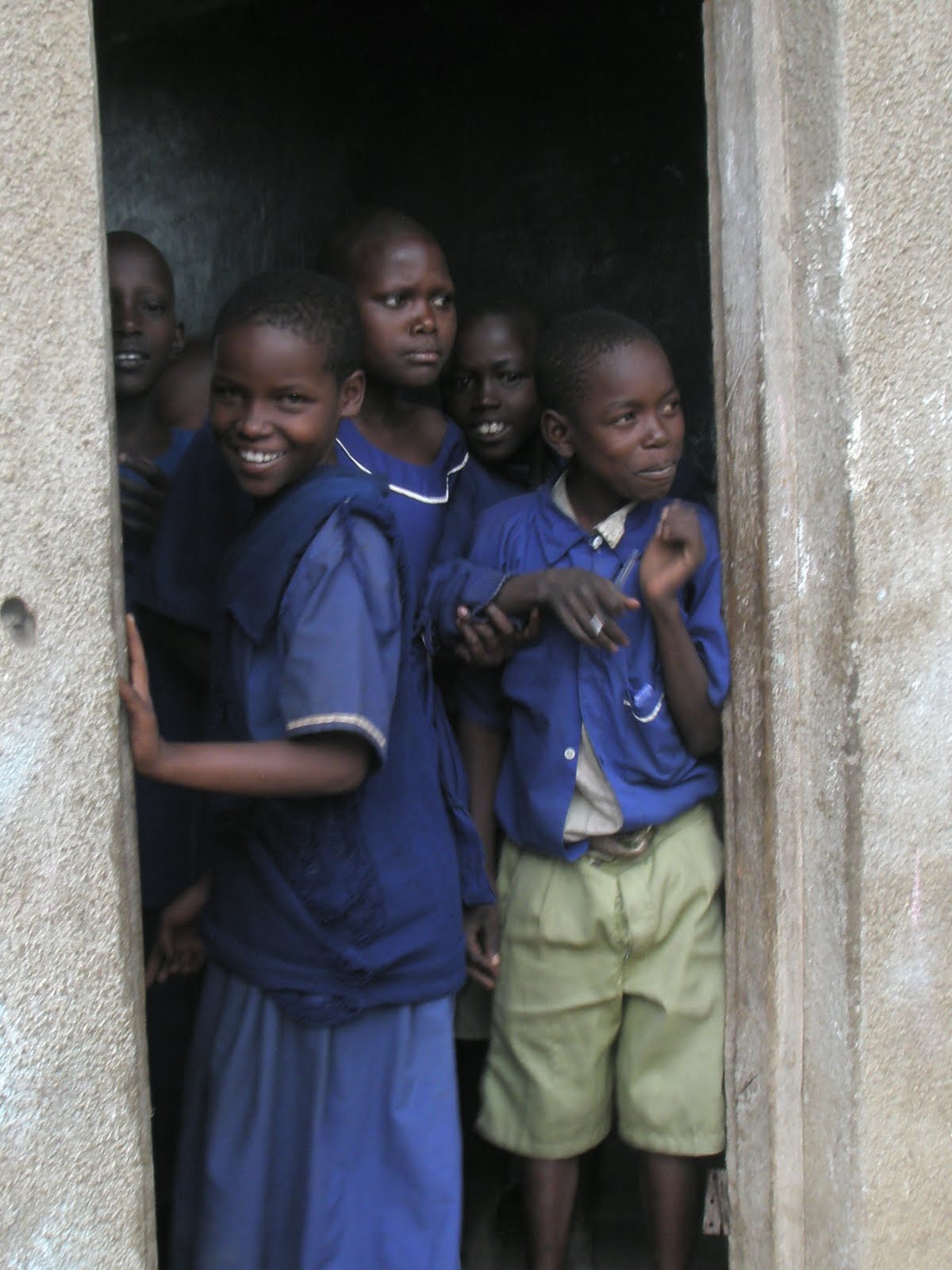
Wherever we went, town or country, there were hundreds, thousands of people walking. Walking along the roads, across the countryside, children in smart school uniforms disappearing across the vibrantly green fields, towards unseen schools or homes, women with bales on their heads, Maasai men with their red and black cloaks and sticks, all just ambling along. There's a beautiful rhythm to this movement, almost hypnotic, and it's something which goes on and on, from dawn to dusk.

The Indian community in Tanzania is much older than the Indian community in Britain, though presumably it owes its origins to the same thing - the British Empire. We saw the remnants of the old colonial culture languorously displayed on Sunday at the TGT Club on the edge of Arusha city. It's an old sports club, built alongside a coffee plantation, now in the hands of American owners. On the field opposite the pavilion, a group of Indian men were playing cricket, while the predominantly white diners in the restaurant and bar looked on. The different cultures and origins of the residents have some curious results: Paolo, 13, born in Arusha to a Belgian mother and an Italian father, was a huge cricket fan, and (by all accounts) a very good player. Doubtless, he'll qualify to play for England soon enough.

There are unintended consequences to the Galvmed story. The charity's ambition is to wipe out 13 livestock diseases and this objective will almost certainly be realised, perhaps even within a decade. The benefits for remote, poor farming communities across Africa are incalculable, increasing wealth and food security exponentially. The same process will change communities forever, a trend already under way in the Maasai communities we visited. These are farmers who, for generations, have been used to losing most of their calves to disease - but now almost all are surviving. Calves vaccinated at a cost of £5 sell for £350 at market. 
In other words, a herd of 300 is worth a huge amount, in anyone's money and some of these pastoralists are rapidly becoming rich. As these individuals gain wealth, the communities around them are changing: there are plenty of traditional huts and bomas (farmsteads), and most of the people we met dressed in Maasai shawls - but other dwellings have replaced their straw roofs with corrugated iron, some houses in remote communities are built of concrete, and a few people own cars and lorries. When we were out in the countryside, in the early morning, Noah Lemorongo, the 40-year-old chairman of the Engarenaibor community asked me in English whether I owned a motorbike. I couldn't understand why. At lunchtime, as we walked away from a bustling village market, he drove up to show off the shining bike he'd bought himself, as if to show off his wealth. Still, as these communities change, it is very striking how many of the younger Maasai choose to remain in the countryside, close to the heart of their traditional way of life. (Note: The photo shows the chairman and half of my fat head, an image that proves the equation: "Wade + baseball cap = Michael Moore.")

The school we visited was blessed with Anna Remi Nchira, a headmistress of outstanding quality. She reminded me very much of the headmistress at my daughters' school in Edinburgh, as if there is some essence of headmistress that is shared across the world. A group of guys from a Western charity and a British newspaper represented important guests - she wasted no time in very formally welcoming us, and, then, just as she should have done, making demands of us, asking us to help her pupils and teachers.

Just as the walkers in the countryside give a glimpse of what like must have been like in pre-industrial Britain, Arusha City (population: 1 million) has the whiff of 18th and 19th century London. It's the whiff of cattle, hundreds, probably thousands of cattle, which are kept in small holdings, right at the heart of the the city, enabling the locals to have access to a constant supply of rich, untreated milk.

Local buses are illuustrated with pictures of great Tanzanian heroes. Here's one we spotted near Arusha coach station. Reading right to left: Barack Obama, Martin Luther King, Michelle Obama, Benjamin Mkapa and Julius Nyrere (both obscured) Nelson Mandela, Mother Theresa, and ... that's right, pop pickers, Lionel Richie.

Saturday, 22 May 2010

At last, intelligent aid for Africa

It is a little after dawn in the Maasai district of Engarenaibor in northwestern Tanzania. Amid a pre-historic landscape of rolling grassland and acacia trees, Paolo Lemorongo, a farmer, is rounding up cows, so that his visitors can see for themselves the tiny yellow tags that have been attached to each animal’s ear. The tag signifies an animal inoculated against the deadly Ndigana kali, better known as East Coast fever.

“Before the vaccination became available, most of my animals died,” says Mr Lemorongo. “If the cows delivered 80 calves, only five would survive. Of course, when vets first brought the treatment here some people were suspicious, but when they saw that so many animals survived, suddenly everyone wanted it.”

Mr Lemorongo, whose home is a four-hour drive by Land Rover from Arusha, the nearest city, is understandably delighted to be the beneficiary of a ground-breaking aid project, developed by Galvmed (Global Alliance for Livestock Veterinary Medicines). This Edinburgh-based charity was founded five years ago with the aim of halting East Coast fever and 12 other deadly livestock diseases that lay waste to millions of animals every year across the African continent and throughout the developing world.

It seems an unfeasibly large ambition...


... and it is hugely ambitious. The whole article is here Galvmed's intelligent aid. Strangely, this article is filed under "Scotland" at Times online; also the paper printed the word Maasai as Masai, I know not why. All of which is rather a shame, because this is a fantastic aid project, which deserves to be widely reported.

The photo is by me, for once. James Glossop took some fantastic pix, four of which you can see on the Times site, and more on his Times blog, when he gets round to putting them up.

Saturday, 1 May 2010

Goldsworthy's shadowlands

Inside a comfortable stone farmhouse, deep in the rolling hill country of Dumfries and Galloway, conversation has taken an unexpected turn. This is the home of Andy Goldsworthy, the world’s foremost environmental artist. It’s a beautiful spring day, he has spent the morning in the fresh air and the time is surely ripe to discuss the joys of the British countryside. But almost unbelievably, from his seat under one of his huge muddy “paintings” — literally, Sheep’s Footprints on Canvas — the artist has suddenly managed to transport himself to the streets of New York.

You are not going to credit this, he says, his keen eyes shining with laughter, but he was almost arrested by the NYPD a month ago — simply for being an artist. He’d been trying to make rain shadows outside the Rockefeller Centre. His plan was to lie down on the pavement, just as a shower began, so that the dry shape of his body would remain after the raindrops soaked the concrete around him. Alas, as soon as he set about his work the long arm of the law intervened. “There is a video of me being evicted from outside Fox News,” Goldsworthy snorts. “Corporate America has such a fear of a terrorist attack. They own the bloody sidewalk.”

So he was frogmarched away? “Oh, yeah. To be honest, the police were great about it. They wanted to know what I was doing but they were OK. The security guards simply would not look me in the eye. I said to one guy, ‘What’s wrong with the world? I had far more freedom in Moscow when it was under communism than I have had in New York this week’. It really was oppressive.”

Goldsworthy’s Gotham City adventure seems absurdly out of character. Here is an artist who, through three decades, has elevated drystone walling to high art, built rivers of stone and clay in parks and galleries across Europe and America, and can make rocks appear to bleed by covering their sharp edges with red autumnal leaves, glued down with spit.

With this body of work it is easy to see how he can be labelled “the British countryside’s most engaging propagandist”, though such descriptions make him shake his head. He has never been a campaigner for an unspoilt rural idyll. As a new book celebrating his permanent works makes clear, it is human intervention in nature that fascinate him: the forests we cut down, the land that is grazed, the stone walls and slate bridges that punctuate the view. He despairs of the chocolate-box image of the countryside and worries that his artworks have helped to perpetuate that image.

“I have become more annoyed at that perception about my work — and about the countryside,” he says. “It has become this kind of pastoral backdrop for relaxing weekends. Nature can be relaxing, it can be healing. But it can be brutal and harsh and difficult, too.

“Nature doesn’t stop when you reach the city boundary,” he says, which is why his trip to New York came up in conversation in the first place. He might be sitting within earshot of a skylark, but Goldsworthy insists that there is a direct link between his day-to-day world, deep in the calm of rural Scotland, and the hurly-burly of Manhattan. “What do we leave behind in the city?” he asks, pleading for understanding. “What gives it its life but our human presence? The shadows articulate that very strongly: the rain falling, the shapes on the pavements. It’s about the nature of the city and of the people who occupy it. New York was the first time I had gone and worked with what I’d find on the streets. It’s very much the equivalent of what I do in this place, which people call the countryside.”

Goldsworthy’s adventures on Sixth Avenue are only part of the story. His focus is Man and Nature and he believes his work to be entering a new phase, reflected by his “obsession” with the rain shadows and by the permanent works he is creating. He cites Roof, nine brooding stacked-slate domes, conceived and installed over more than two years at the National Gallery of Art in Washington. “Maybe it’s a way of beginning to flex your muscles and understand things,” he says. “The whole conceptual process, the whole physical act of making it, the scale of it. It is just much more complex.”

Admirers too have registered a new brilliance in his output. When, in a recent essay, Antony Gormley despaired of finding contemporary artists who could address the climate crisis of “our perilous times”, he turned with relief to one of Goldsworthy’s most recent works. From the outside, Stone House – Bonnington, in a wood near Edinburgh, part of the Jupiter Artland sculpture garden, looks innocuous enough. But within the dark interior the earth has been completely cut away, down to the bubbling igneous surface of the bedrock, revealed in the dim light cast from a single window. When Gormley stepped inside he was exultant. He had been shown “the underneath” of everything, “a useless building in which we could encounter our dependency: a brilliant work”.

Such elemental pieces are conceived in the fields and glens around Penpont, Goldsworthy’s home and testbed since 1986. These days it is a well-ordered place that signals the artist’s prosperity. A sign in the drive warns off visitors arriving without an appointment. Inside, his studio and photographic archive are kept in order by an office manager and by Tina, his partner, an academic at the University of Glasgow.

It was all rather different when Goldsworthy arrived, a refugee from the English Pennine landscape. Born in Leeds in 1956, but with roots in Bacup, Lancashire, he had studied art at Preston Polytechnic. He was pulled farther north by sheer economic necessity, first to Cumbria, then to Langholm, finally to Penpont: “I was poor and it was very cheap.” He stayed because he was accepted by the community, but never lost his northern English accent.

Over the years he has repaid the tolerance of the locals by filling their land with his art. A handful of these works are permanent. The Give and Take Wall, his first wall sculpture, was built in Scaur Glen in 1988; last year, in a powerful stream near Drumlanrig Castle, he built the Marr Burn Arch. In the years between he made perhaps a dozen stones, stacks, folds and cairns, which occasionally hove into view across the landscape.

Substantial as these are, far more of his energy has been spent on his ephemeral works, which he makes at a feverish rate. Every year, 200 or so of these emerge, their dragonfly lives glimpsed only by farm workers and the occasional hiker. This morning, he says, he was experimenting with mud paintings (“It was a peaty mud, I tried it on trees — it wasn’t very good”), but everything is possible: streamers, rushing down the course of the Scaur burn, coloured pools made of bluebells or dandelions, delicate curtains built of twigs or icicles and deftly worked by the artist’s hands and teeth.

What does it feel like to make a perfect piece of art that is never seen by anyone else? Goldsworthy laughs nervously, as if he’s never thought of that. “What does it feel like? Amazing. But not because I’m alone. Because it’s amazing to get something right.”

Andrew Morton, who has the neighbouring farm, sees more of his work than anyone in the world. Goldsworthy remembers a morning when he was making a frost shadow. The artist explains: “Where my shadow falls, the frost remains. I have to stand a long time, three quarters of an hour. Andrew was on his quad, I could hear him and I could see him go out on top of the hill. And he could see me, someone standing still — it’s amazing how you stand out. So eventually he went down to a turnip field of his. He drove back up, shouted ‘Morning’, and dropped me off a couple of turnips. And drove straight on.”

Like these shadows, many of his ideas endure, and repeat themselves. Ten years ago he packed 13 giant snowballs with pinecones, berries and barbed wire found in the countryside and brought them in to the City of London to melt, in celebration of the millennium midsummer (not everyone celebrated — it was an act of “urban terrorism” according to the art critic Brian Sewell). A darker emotion informs artworks that he is making now for the isle of Alderney, though the principle is the same.

The gestation of this installation speaks volumes for Goldsworthy’s ingenuity and thoughtfulness. When he was invited to the Channel Island, Goldsworthy imagined “a tax haven, very swish”. Instead, he discovered a place with “a real island mentality” and a brutal wartime history. After 1940, Alderney was occupied by the Nazis, who fortified it and built a concentration camp. The German bunkers remain, along with a bitter memory of occupation.

“See that boulder over there?” he says, stepping into the courtyard behind his studio and pointing at a giant clay sphere. “I’ve used clay from the island, and, like the snowball, I’ve embedded things inside. They will be placed all over the island and, as they erode, what’s inside will leech out. Some of them are very strong — it will take years, but some are by the sea and they might erode more quickly.”

After he had outlined this idea at a public meeting he was asked by an islander not to use barbed wire in the boulders because “memories are that raw”, he says. Pondering his response, he finally alighted on a vivid and moving work: “The boulder I will put outside the concentration camp will have poppy seeds in it, so over decades the seeds will germinate and this red growth will come out of the stone.”

These progressions take Goldsworthy far from the accusations of New Age whimsy that once dogged his work. But to move onwards it is not enough for this artist to build on his ideas from the past, which sometimes seems too cosy, even to him. His constant theme is change and transition, and in that process, he says, some works must inevitably be abandoned.

Take the sandstone cairn that stands sentinel on the road into Penpont, a piece so familiar it could be embossed on Goldsworthy’s business card. You can find a clutch of similar works anywhere between Edinburgh and Oxfordshire; another 20 or so are scattered across three continents.

“I consider the cairn to be finished,” he says, with more than a tinge of contempt in his voice. “When I see the catalogue and I count how many I’ve made, it really annoys me. There is an idea that people become more compromised as they get older — it’s gone the other way with me. I was making them for legitimate reasons, but in retrospect when you see them . . .” He leaves the expletives unspoken.

And yet, just when he thought that he had made his last cairn, the idea revived itself. His plan now is to mark out a rainforest walkway in Queensland, Australia, in a project pregnant with symbolism.

Goldsworthy plots out his artwork rigorously. “There are fig trees in the forest that grow high up in the canopy. A bird eats a fig, then wipes its beak on the bough of another tree. The seed germinates and then these incredible roots, this latticework, falls down around the host tree. It strangles the tree it is growing on — it eats that tree. It is amazing. They call them strangler figs.

“That was a good enough reason to bring the cairn back. I am making a cairn, and I’m putting a strangler fig on top, so it will grow and digest the sculpture.” By then all that old New Age whimsy will have been eaten up, leaving only this great artist.

The Andy Goldsworthy Project is published by Thames and Hudson at £35. To buy it for £31.50 call 0845 2712134 or visit timesonline.co.uk/bookshop Jupiter Artland reopens on May 14 at Bonnington House, Kirknewton, Edinburgh; jupiterartland.org

This appeared on page 3 of the Weekend Review section of The Times.